


Who decides when you can call yourself a writer?
Who decides what you write about?
Who decides what you consume in your free time — you or an algorithm powered by hordes of sneaky oil salesmen?
At some point you handed over these easy decisions to algorithm-driven engines that pretend to know you better than you know yourself. You still have full freedom of choice, but suddenly you’ve locked yourself in a golden cage, where the choices are limited.
You want it or not, someone still has to choose.
It has just gotten easier to forget that the someone is you.
This month in Unfiltered, three things I want to share that shaped what I paid attention to.
First: Slow AI: Knowing When to Use AI and When to Leave It Alone, by Sam Illingworth.
A special place this month on my reading list. Not because it’s an extraordinary book — it isn’t, and has no aspirations to be. It’s the first book that describes the fundamentals of AI literacy while skipping the technical aspect entirely. The kind of book I wish were given to teenagers in school, to help them build a healthy relationship with modern technology early on.
Humans are still in the driver’s seat, aren’t we?
Second: art curated by Rose Florence.
Among all the noise, I appreciate human curation of art — something even the most sophisticated prompt cannot mimic. One artist or theme at a time, with no algorithm choosing what’s good from the sea of forgettable, for you.
Someone deciding what’s worth a longer look, and what fits together in an invisible way, before any algorithm notices there’s a pattern. Her ephemeral summer art selection stole my heart this month and hit the right spot. No need to study art or art history to appreciate a beautiful selection of pieces.
Thanks to Rose Florence, I discovered number three this month.
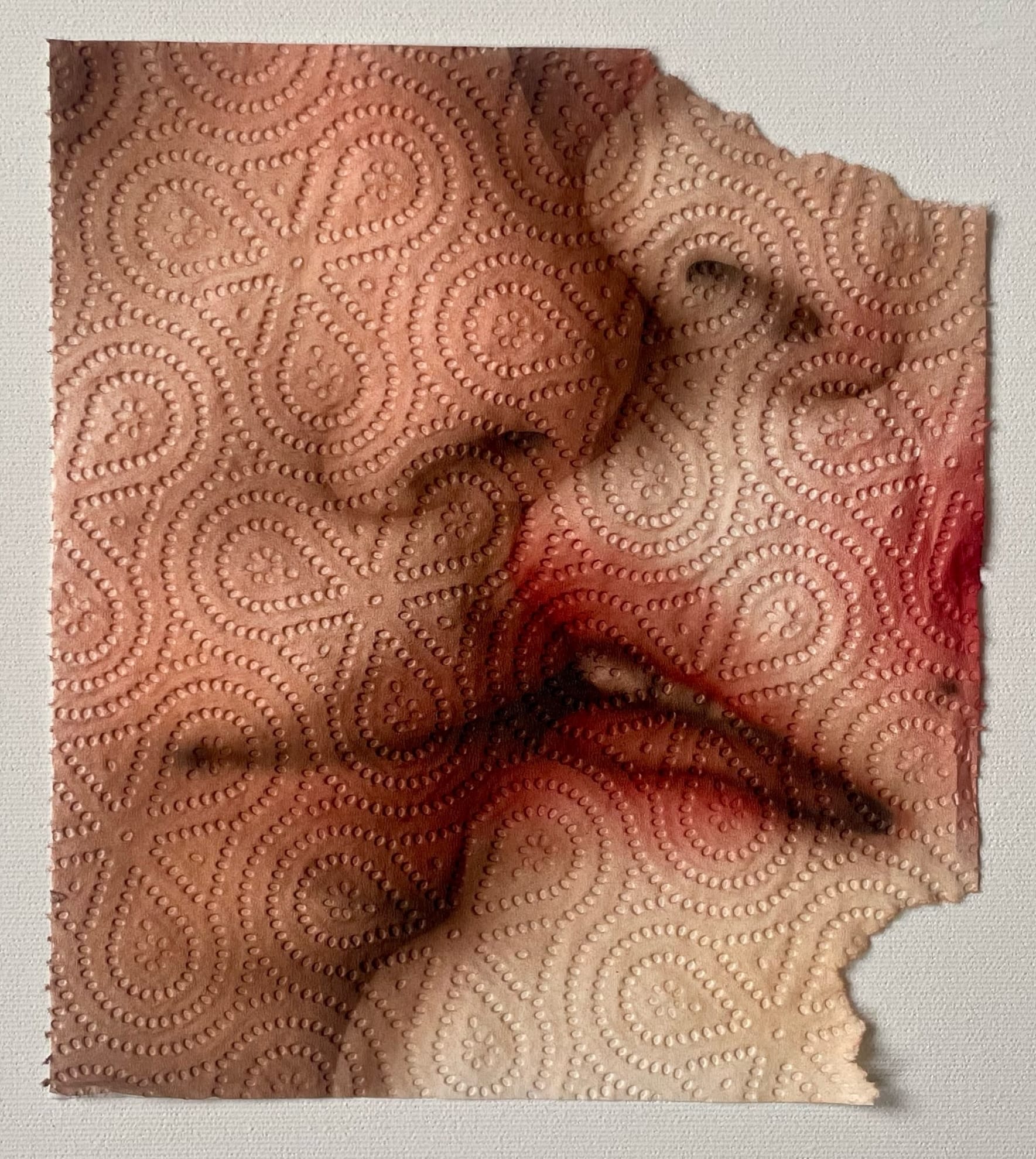
Third: Helena Minginowicz
A Polish artist who paints Renaissance-style portraits on paper towels. Through her work, she embraces fragility, impermanence, and the ephemeral nature of human life.
She’s asking valid questions:
Who gets remembered?
Who gets discarded?
Who decides?
It's an important reminder that civilizations and their heritage can be easily wiped away or forgotten in the blink of an eye. That, too, is curation — Minginowicz deliberately chose mass-produced, machine-embossed household paper towels as her canvas.
Different mediums. Same argument. The human still sets the direction. Every single decision shows where our values and priorities lie — what's important to us, and what we ignore on purpose.
The decision to stand between yourself and the noise and say:
this,
not that,
over and over again.
So here’s the key question July left me with:
When was the last time you paused there on purpose and made a conscious decision entirely by yourself ?
That’s the muscle every feed and every model is quietly atrophying: the strategic pause where a person decides something should stay or should go.
You are not a passive receiver of reality.
You are its curator.
The feed profits from you delegating the small pieces of power. The model profits from you delegating the small pieces of power . No one will ask you to take ownership back - it is bad for business.
Someone has to keep deciding what’s real, what matters, what’s worth the look.
It was always going to be you.
Fin.
While you’re here:


Really interesting Lucy, I love the term "Strategic Pause", I'm definitely going to be trying this! Thank you ☺️
“The strategic pause where a person decides something should stay or should go” really stayed with me. We often speak about freedom as having more choices, but perhaps it begins with reclaiming the attention needed to choose at all. The paper-towel portraits make that idea feel beautifully concrete: even the most fragile surface can carry meaning when someone chooses it deliberately.