


Another year I have been asking myself:
Who decided school holidays should run six weeks straight through the exact month most workplaces expect you at your desk?
Nobody currently employed, that’s for certain. The calendar was fixed generations ago, for a world with one parent working and one parent home.
That world is gone. The calendar didn’t adapt at all. Back to school hits different when you’re an adult.
I’ve spent most of August negotiating childcare like it’s a logistics problem, because it is one — not a personal failure to plan better, rather a structural gap nobody redesigned the moment the assumptions underneath it stopped being true, a long long time ago.
Why do we accept status quo when changing it would cost less than pretending it still works?
It is one of many burning yet invisible problems we are still facing in 2026.
That’s not the point of this episode.
Today: one painting, one book and one bitter conclusion to wrap up the month of August.
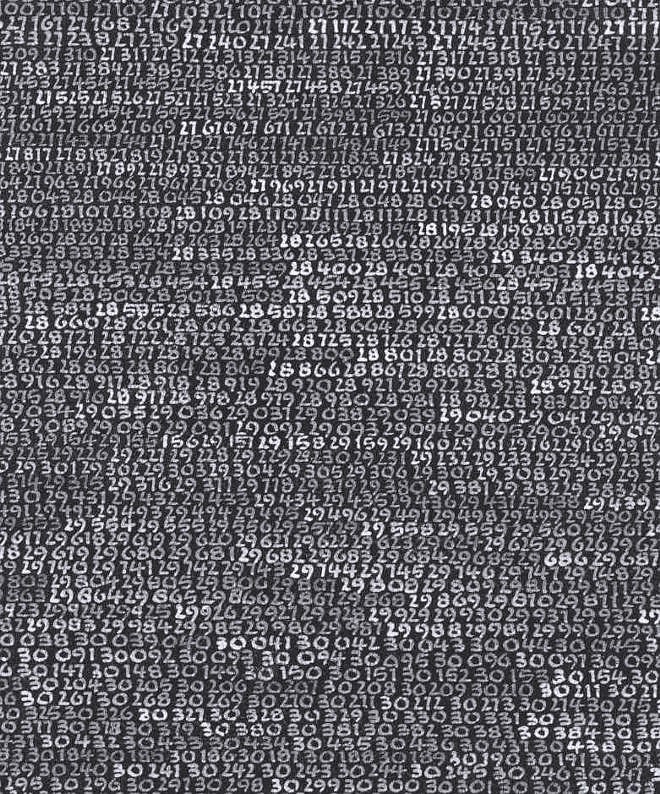
For 46 years, Roman Opałka painted sequential numbers counting toward infinity he would never reach. Moreover, with each canvas he added a fraction more white to the grey background, so the numbers grew fainter as he aged, until, by his final works, they were barely legible white on white.
He didn’t choose the numbers because they meant something. He chose them because once he started, stopping would have meant admitting the count didn’t matter. The impressive part is not the counting itself, but how completely a self-imposed structure can outlive the reason for it, and keep extracting a life anyway. Absolutely fascinating.

From painted numbers to a book about money — which, ironically, stayed with me for reasons that had nothing to do with money.
The Psychology of Money, by Morgan Housel, isn’t about spreadsheets.
According to Housel, financial decisions are rarely rational — inherited behavior, shaped by fear and timing, defaults nobody consciously chose. You didn’t reason your way into your relationship with money. You absorbed it, the same way you absorbed which month is “supposed” to be for rest (August, obviously), which hours are “supposed” to be for work, which structures you’re not meant to question because they’ve simply always been there.
Comfortable, isn’t it? Indeed.
Same mechanism. Different currency.
Bitter conclusion that I arrived at after reading the Workplace report after my PTO:
Workplace wellness programs are like a blister patch for a deep cut, pretending to fix this same mismatch from the other end. Meditation apps, wellness Slack channels, mandatory-fun Fridays are treating the exhaustion as a personal deficiency to manage rather than a structural mismatch to redesign. They don’t fix the rootcause.
Why the actual problem keeps evolving faster than the solutions built to hide?
More on that next week. It’s a river topic — it doesn’t resolve in one piece, and it shouldn’t.
For now, let’s push the angle even further:
How much of what runs your life still works?
How much just keeps counting so it never has to stop?
No wrong answers. Just better questions.
Fin.
While you’re here:


This really made me think about how many systems we still live inside simply because nobody has redesigned them. When we lived in Italy, the school summer holidays were literally around three months long, which always felt completely disconnected from the reality of parents who work. What are families actually supposed to do with that? I really liked your point that we so often adapt ourselves to outdated structures instead of questioning whether the structure itself still makes sense. And the image of something “just keeps counting so it never has to stop” is such a good way of putting it.
Thanks Lucy, I do wonder what the alternative could be…I had the blessing to be able to leave my job when my first kid was born, but not everyone had that luxury…I also don’t think kids should be in school throughout the whole year! Maybe parents should get the same amount of time off at work but as a business owner, how do you keep a business running?