



The workplace was never built for anyone to feel at home.
It was built for a specific performance of competence — eye contact, spontaneous small talk, internal politics read in real time, that particular tension of disagreement that’s almost impossible to describe unless you’ve sat in the room for it.
Then came remote and AI-assisted work. The intention was never to accommodate neurodivergent professionals. Somehow it built a shelter for the ones who no longer want to perform extroversion in an office just to be taken seriously.
A topic that connects us both as observers from the inside, but from different seats:
Erin Pyper, MSW, author of Pragmatic Social Work, a newsletter addressing bureaucracy, disability rights, free speech, family dynamics, public safety, and accountability. Pragmatic Social Work strives to bring people together in a divisive society. This means giving people, regardless of diverse perspectives and backgrounds a chance to advocate for themselves and access support. Let’s work together to combat echo chambers and fight for true support.
Lucy Blachnia, author of human logic, a newsletter every two weeks on how AI is rewriting the terms of professional work. Education Lead at Women in AI Spain. Fascinated by transformation in every shape it takes, from digital transformation through ecosystems restoration.
The following discussion unpacks the real impact of remote work and AI-assisted tools on neurodivergent professionals, while pulling back the curtain on the day-to-day realities of everyone else's work.
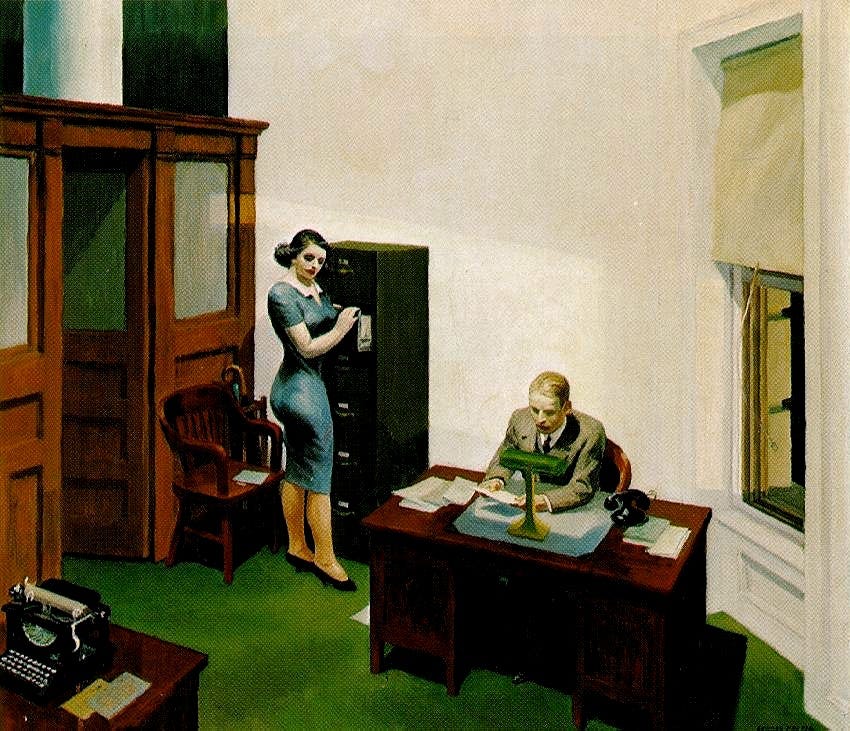
Lucy: Blessing or a curse? When talking about rapid technology development in the 202X it’s impossible to ignore the wider implications on the professional life of many. Under the microscope we have neurodivergent professionals and strong belief that great on-stage performance is not enough to survive. Has it ever been?
Erin: I believe that rapid technology is a blessing and a curse. I believe that some weed out neurodivergent talent while other tools assist them with the job hunt. Some items assist with writing and reading social cues.
As far on the stage performance is concerned, I believe it goes much deeper. I believe that too much masking is exhausting and tiring. I think there is too much pressure to fit in the workplace.
L: I can sense the overall exhaustion, especially among millennials fed up with false promises about their careers and dream life that will never become true. Professionals who are still there pursuing corporate careers in the digital era elevated their facade - perfect personal brand, vulnerable enough in a professional way but not too much to overload whoever is watching. Following the script and still smiling.
What about neurodivergent professionals in modern (onsite) workplace?
This is how I see it: a place designed for performing 250% in a tiny room, constant eye contact, networking and delicate office politics to navigate. From your experience, do they have to be constantly masking to adapt to the rest of the beehive? That sounds extremely exhausting and unsustainable in the long term. My bet is remote work comes to the rescue.
E: You got excellent point here, and remote work can make a bigger difference. I think that does not force them into an office corner.
L: What’s your advice for someone at the beginning of that exhaustion curve - push through and show up anyway, hoping the workplace adapt or protect their energy and retreat to remote/asynchronous work even if it costs them visibility and promotion? Because those two paths lead to very different careers. You cannot always climb a corporate ladder hiding behind your monitor or eating lunch at your desk.
E: I recommend asking for help whenever things get stressful. This means asking for support from coworkers and supervisors. I also suggest asking for breaks when the work environment gets overwhelming. Pushing through without help works temporarily, but it leads to significant long-term consequences.
L: Perhaps you’re right. Today’s job market moves fast, and work environments can get overwhelming quickly. Either you learn to adapt to the pace, or you’ll struggle to keep up with both your colleagues and your customers.
And maybe this isn’t only about neurodivergent professionals — it’s about anyone who’s spent this economy trying to find their place and make sense of it. The modern workplace is more accessible and more inclusive than it’s ever been. Rapid technology and remote work didn’t just remove barriers. They removed any excuse for keeping them.
E: Exactly! It is tiring for everyone at work, and I am glad remote work makes it easier for them.
Ultimately, your workplace becomes whatever you allow it to be through the boundaries you set with one another.
A career is no longer just a straight climb up the ladder. Today, growth is about cross-team work, lateral moves, and finding new paths. A rigid corporate mindset isn’t for everyone—neurodivergent or otherwise—but navigating it remains a fascinating study in human relationships under pressure.
Technology, at its best, should empower rather than limit.
It should open doors—even when, at first glance, it feels like it’s closing them.
Fin
While you’re here:


I am glad we did our first collaboration article. I hope it makes a significant difference for the neurodivergent community. Thank you for doing the piece with me.