


Old solutions don't solve new problems. Just like kids outgrow their parents' plans.
Somewhere, a parent is grieving a meticulously planned, socially perfect future their kid never actually wanted. That same person is looking at their kid's calloused palms, feeling deeply disappointed. It didn't turn out how they planned — they'd pictured them studying hard, going to university, following a linear career path.
Doing better than their parents did, without a doubt.
Better in what sense, exactly?
A rat race with no finish line and broken dreams backed by six figures of university debt.
Well, no thanks. Not in 2026.
The numbers don’t add up anymore.
Turns out the numbers stopped adding up long before anyone noticed.
The lipstick index is a well-known indicator among economists — an unofficial, sometimes inconsistent signal, outside standard macroeconomic reporting, that represents consumer sentiment in a not-so-obvious way.
After lipstick sales rose following the 9/11 attacks: when discretionary income contracts, people don’t stop spending - they downgrade what they spend on. Perhaps you can't afford the Bahamas next summer, but you can still get a Lancôme or Chanel lipstick at Sephora to wipe your tears just a little.
The evidence on the lipstick index has been mixed, but one thing remains universally true: people reveal the true state of their finances not through the purchases everyone's watching, but through the small, overlooked ones nobody thought to track.
That is a blind spot.
Job security had its own version of that blind spot, and for twenty years, we read the wrong indicator.
“Security” meant a title, a ladder with enough rungs to retire on. The office, the badge, the org chart with your name two or three boxes from the top. That was the door everyone watched — the one with nameplates on it, the one that photographed well on LinkedIn.
Everyone ignored the other door that stood open the whole time.
No one watched it because no one thought it needed watching.
It smelled like solder / soil / acetone / hairspray or antiseptic.
Unglamorous.
Here’s the reversal nobody saw coming: the jobs that felt most “secure” — white-collar, credentialed, mid-hierarchy — are precisely the ones a model can now replace. Draft the email, summarize the report, generate the deck, write the first pass of the code. The scaffolding that made knowledge work feel stable, replicable, promotable is exactly what turned out to be automatable.

And the jobs everyone looked down on — the ones with no title worth repeating at a dinner party — are still standing, untouched, because no model can crawl under your house and re-route a pipe or notice by feel that something in a patient’s breathing has changed.
Security was never about prestige. It was about proximity to the physical, the specific, the unrepeatable moment. We built a culture that told us to run the other way, and called it “ambition.” Moreover, that path gives you something even more precious and desired these days - freedom and independence.
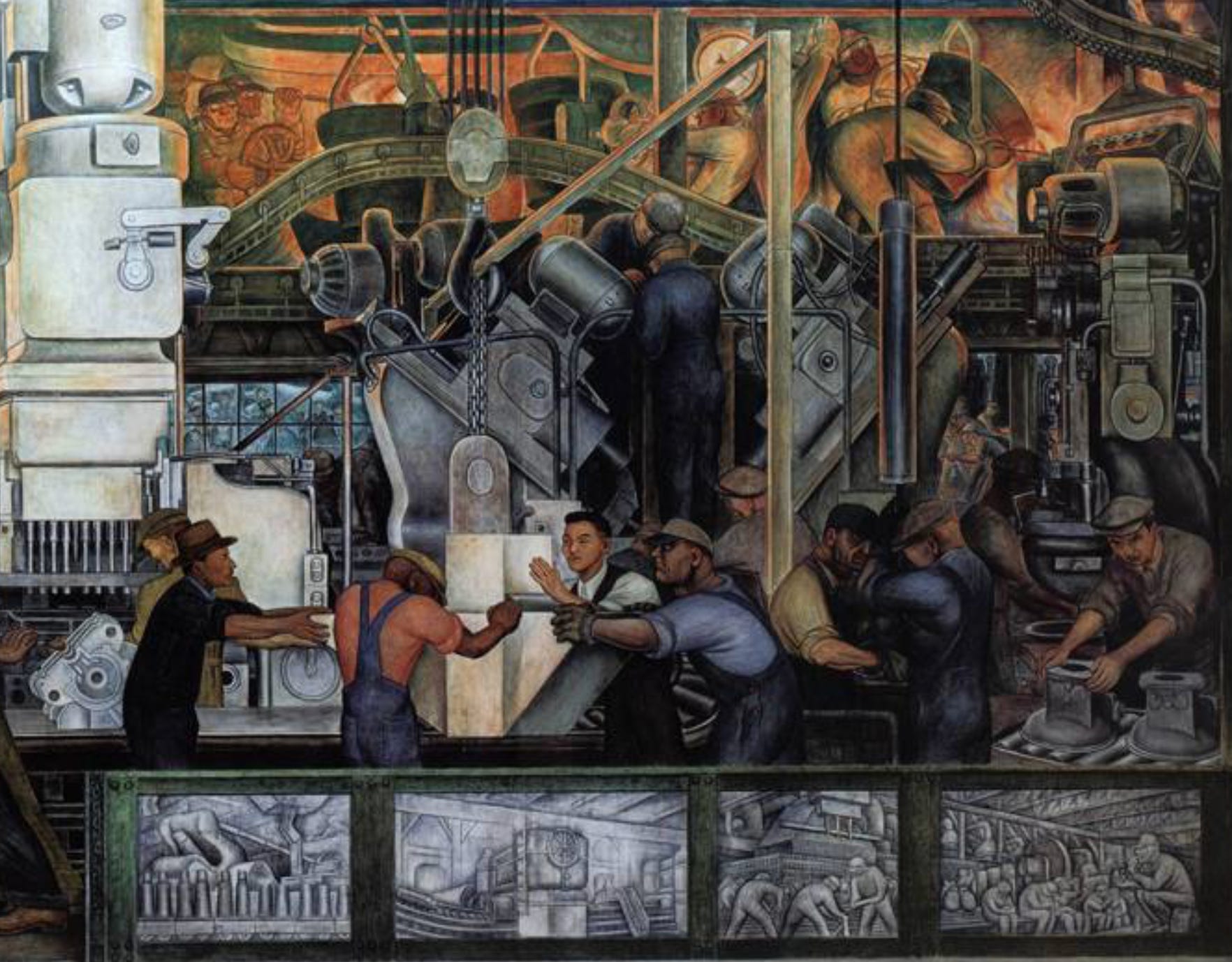
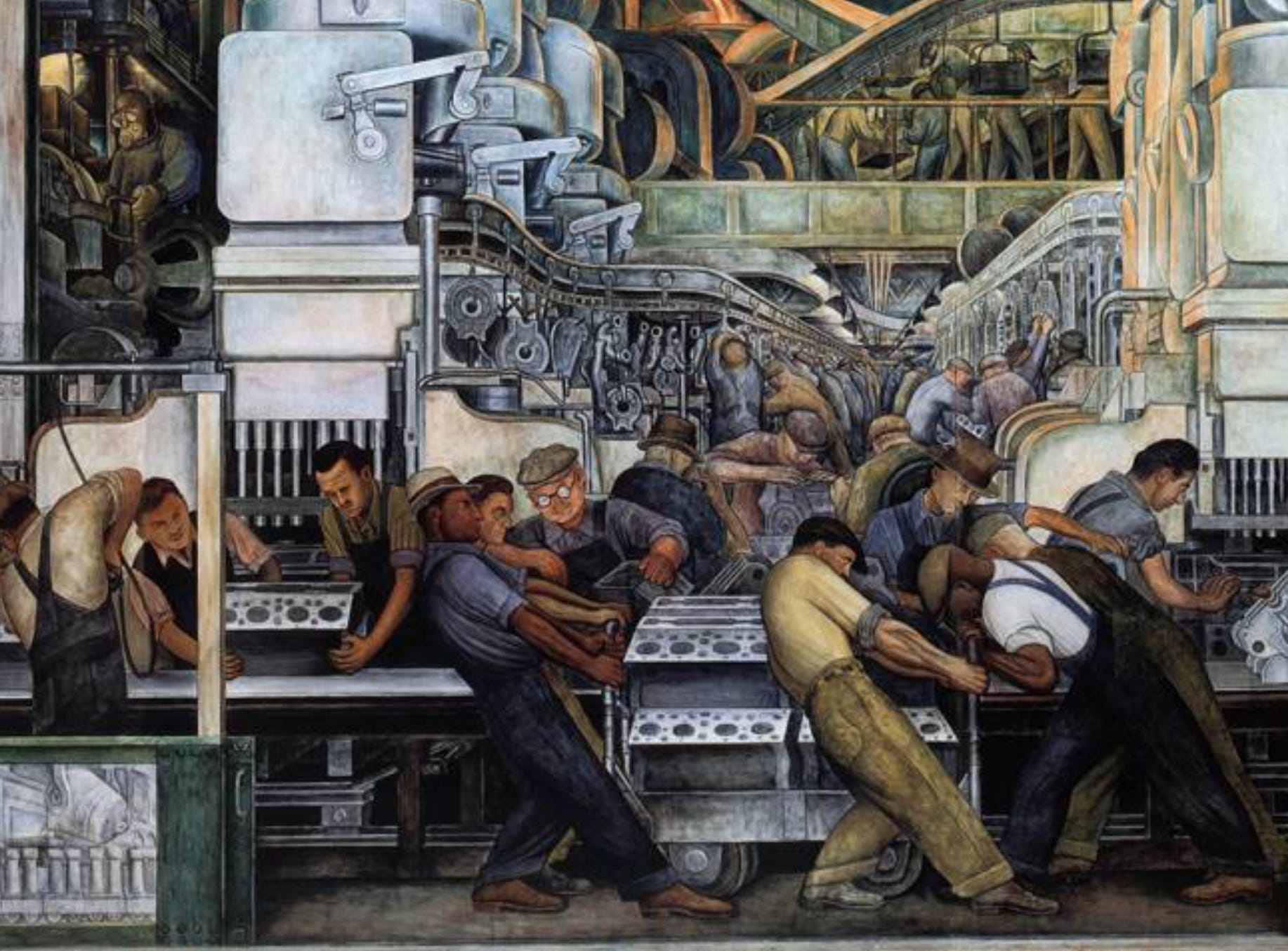
Diego Rivera wouldn’t be my obvious choice, but to illustrate the value of physical work, I couldn’t find a stronger piece. These hard working men never aimed to be remembered — someone decided they deserved that attention and tribute anyway. This is whole argument, just louder and represented in twenty-seven panels:
You don’t need permission to matter.
You just need to still be standing when the fashions move on.
Which raises the question that parent, telling their kid to stay in school, maybe isn’t ready to acknowledge:
How many of us climbed toward the wrong kind of stability?
How many years spent optimizing for something that doesn't really matter?
A title, position, recognition? Pats on the shoulder from strangers.
People tend to forget that old solutions don’t solve new problems. We chased a promise no one ever signed, using an indicator built for a world that no longer exists.
Not looking at what security and stability actually mean for you, not for the crowd.
Perhaps security was never a place you arrive at — you can look at it as the moment you stop reading someone else's map. Or not.
It's up to you.
Fin.
While you are here:


Organisations have a purpose.
You give them your skills + time.
They give you money.
That doesn’t mean their purpose has to be YOUR purpose.
Today is about using your skills freely,
and growing without stepping on others. 🚀