


There is no such thing as a millennial crisis. What looks like a personal breakdown — the inability to pretend the ladder leads somewhere worth climbing — is not a single unit malfunction. It is a collective shift. An entire generation arriving at the same realisation at the same time, through different doors. Not a crisis per se.
People are endlessly exhausted because old solutions don’t solve new problems.
Millennials are mourning. Summer is as good a time as any to look closer at how being present turned into collective grief, a wellness industry, and back-to-back Zoom calls.
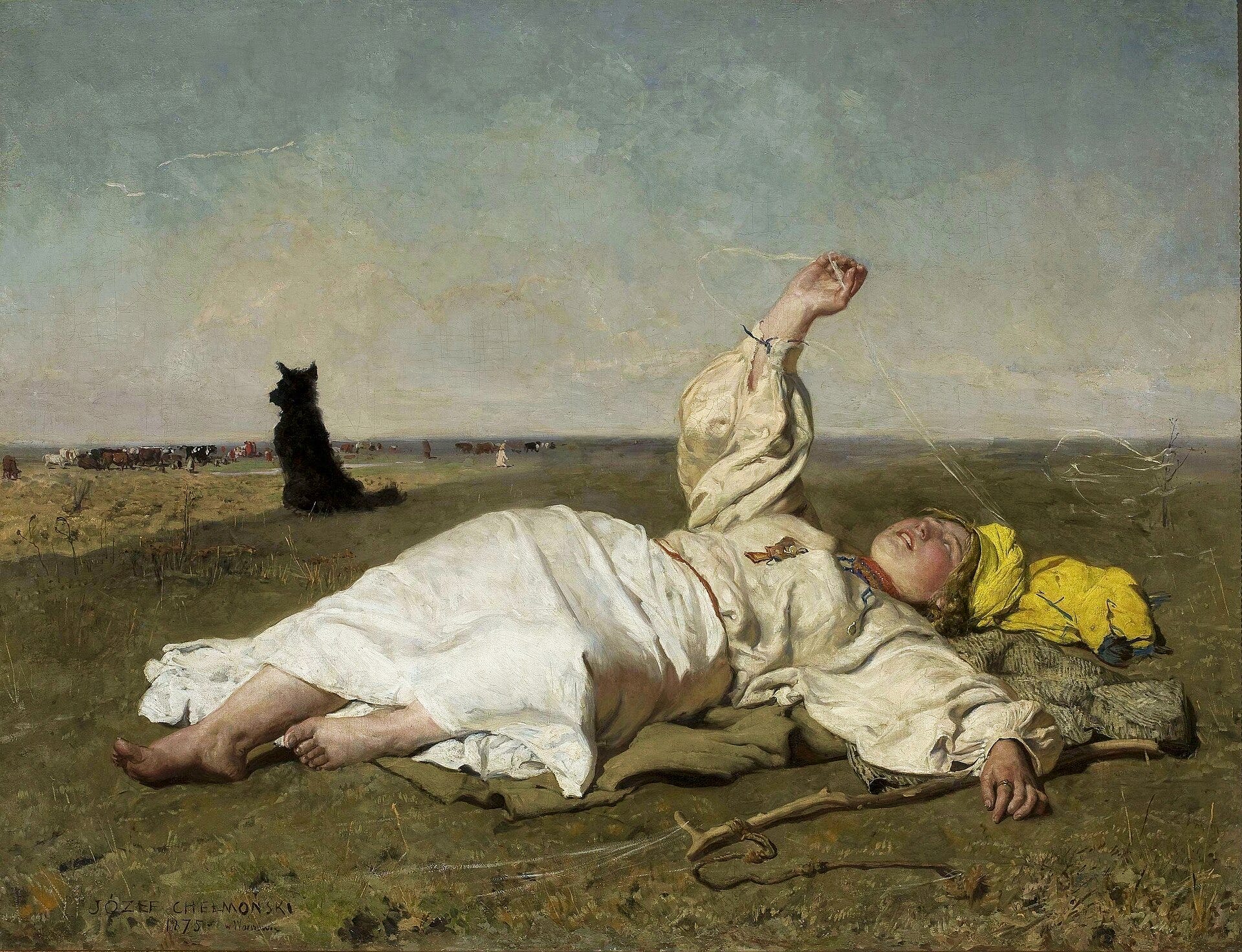
After 2010, presence became a practice. You have to schedule it. Pay for it. Download an app that reminds you to breathe. Count your glasses of water and your steps. A boom for retreats, protocols, and certifications began. You really need an Ōura ring, a Whoop, or at least an Apple Watch — otherwise how do you know if your body needs recovery or not. Entire industries built around the radical act of being somewhere without also being elsewhere. Companies tie you in with ongoing subscriptions, promising what you desire most. Ideally you should permanently desire but never quite arrive. Right next to it on the pedestal, the Ozempic economy is swallowing new victims — and they are delighted to fall into the loop.
A solution for a problem that didn’t exist. Mindfulness didn’t exist.
Neither did the compulsion to leave the moment you’re in. Take out the phone. Take a picture that is never as good as what you are actually experiencing.
How easily we forget that the disease came first.
How silly of me - it didn’t come out of nowhere.
We didn’t develop a presence problem and then invent the phone. We invented the phone, then the social media, then the obligation to document everything that happens to you (mostly for proof) and the presence problem came unannounced like hypertension. By the time you notice it, it’s just how things are.
The same mechanism applies to everything else we’ve handed over. Technology is advancing faster than our ability to grieve the parts of ourselves being replaced. There is no official mourning period. No acknowledgment that something was lost. Stick that smile to your shiny face, grab your matcha, install the new software, and off you go — you’ll handle it just fine. And you do handle it. That’s the whole problem. The adaptation happens so efficiently that you never stop to ask what exactly you adapted away from.
Yet deep inside, if you let yourself think clearly for a little longer, you feel it — the upgrade happened too fast. Software patches won’t help for that pain deep inside your soul. Accumulating more wealth won’t fill that gap. Following someone’s 5-to-9 before 9-to-5 routine won’t help.
Don’t look at me. I wake up at 7:45am and have no regrets.
Someone who had more regrets and better credentials thought about this decades ago. Albert Borgmann wrote about this in the 1980s, long before anyone had a smartphone. He called it the device paradigm — the way technology hides its own workings while delivering a commodity, and in doing so, quietly displaces the practices and relationships that used to give life its texture. The fireplace doesn’t just heat the room. It organises the family around it. Replace it with central heating and you gain warmth and lose everything else. Borgmann called what was lost a focal practice — something that demands your full presence and returns meaning in exchange.
We have been replacing focal practices at an accelerating rate for thirty years. The dinner table. The letter. The walk with no destination. The conversation that had no agenda and no follow-up action items. Each replacement was an upgrade by every measurable metric. Each one cost something that didn’t show up in the data.
The grief is real. It just has nowhere to go. There is no funeral for the version of yourself that used to be unreachable after 6pm. No ceremony for the attention span that existed before the feed. No acknowledgment that something was lost when your thinking started happening in bullet points and your rest started requiring a wearable to validate it.
You adapted. You complied. You installed the update.
And somewhere in the process, without meaning to, you handed over parts of yourself you didn’t know you were carrying.
My intention was to write a light essay for summer and I ended up talking about grief. So let’s circle back to the beach.
The white collar professional is particularly resistant to full disconnection. Not because they’re weak, but because the job never fully ends, the brain is still in work mode and you don’t know how to help yourself forget.
Nowadays rest requires effort. Switching off is a skill you have to actively practice. Even if you delete all the applications ( like I do) your brain is still in work mode. You already know there will be plenty of things on your plate as soon as you’re back. You know what’s awaiting.
Smile. Install the software update. Off you go.
The out-of-office is on, the calendar invites are automatically declined and suddenly you don't know what to do.
The nervous system doesn’t know what to do with silence. You reach for the phone out of reflex, not need. A particular kind of anxiety arrives, not from too much happening but from too little. You lack the structure defined by your Google Calendar.
This is the essence of the burnout society as described by Han. A culture so saturated with productivity that it has lost the capacity for genuine rest. Rest is not the absence of work. It is a fundamentally different mode of being that cannot be scheduled, optimised or tracked on a wearable. Reality is some people never get there. They hover at the edge for two weeks and call it a holiday.
But around day three or four something shifts. The urgency fades. You feel for a while like a person rather than a function in a corporate combine-harvester.
For most people, it’s the only two weeks of the year they actually live in.
The cure is not another app. Not a morning routine, a dopamine detox, or a digital sabbath. The cure is slower and less comfortable as expected. The compulsion to document, to perform and to stay connected, these are not personality traits. They are trained behaviours. Trained behaviours can be untrained. But first you have to survive the boredom. No agenda. No optimization protocols. A beautiful view you’re not photographing. A conversation you’re fully in.
Nothing to prove. Nowhere else to be.
Presence is free. That's why no one is selling it to you straight.
Fin
While you’re here:


One thought stayed with me throughout this essay: perhaps what we call “presence” is also a form of mourning for everything we quietly handed away without realizing it. Thank you for reminding us that some things cannot be optimized—only lived.
What really stayed with me was your point that we didn’t lose presence all at once. It disappeared so gradually that most of us accepted the trade without realizing what we were giving up. I also kept thinking about how this shows up in money. The same habits that pull us away from the present make it easy to avoid opening an investment statement, reviewing a retirement plan, or noticing that small financial decisions have quietly become big ones. Presence isn’t just emotional. It’s practical.
This gave me a lot to think about. Thank you for writing it.