


There is more content being produced right now than at any point in human history.
Good content, too. Structured arguments. Clean sentences. Ideas that are correctly formed, hit the expected beats, cite two or three relevant examples, and arrive somewhere reasonable.
You’ve read it. You’ve laughed at it, shared it, felt something for thirty seconds. The lifespan of a piece of content has never been shorter than it is right now.
The floor has risen. Getting to “average” has never been faster, cheaper, or more available to more people. And here is what nobody is saying clearly enough: this is one of the better things to happen to distinctiveness in a long time.
Average becomes free. Becomes invisible. Holds zero value.
It is only background noise now. Your baseline expectation. The thing that no longer registers because it’s everywhere.
But this happened before. When mass manufacturing arrived, it didn’t kill couture. It made the difference between a coat and a coat visible in a way it hadn’t been before. The gap between good and excellent had always existed. Mass production just made it readable. You shop on Temu or you shop on Etsy. No need to explain the difference. No need to tell you who is behind it. You know it yourself — and with every purchase decision, you show where your values and priorities lie.
AI is doing the same thing to cognitive output. The average is now a commodity. Cheap Temu gadgets. Which means anything above average is — for the first time in a while — actually distinguishable.
If you’ve been optimising for competence, this is uncomfortable. Competence was a reasonable bet when it was rare. Now everything feels like one prompt away. You don’t need to hold a university diploma for it.
Before I go further:
Last week I read Abi Awomosu’s essay Where is the Mother? — a piece that traces the entire lineage of Western knowledge production through its founding fathers and asks the question underneath: where the heck, in this chain, is the mother? Her argument is that the training data AI runs on was never neutral. That the relational intelligence, the contextual knowing, the craft that didn’t come with credentials — this was systematically excluded from what the system decided counted as knowledge.
This isn’t new information. Caroline Criado Perez documented the same structure in Invisible Women — how the default datasets that built our world, from crash test dummies to medical trials to urban planning, were male. Not out of malice. Out of assumption. The neutral was never neutral. It was just unmarked.
I am angry about this. Hey, you should be too.
Not because it’s unfair (though it is). Because we are now building the next layer of intelligence on top of the same crooked foundation and calling it progress. The canon of great work was always a selection. Not a discovery. And that selection is now being encoded at scale, at speed, with the confidence of people who never had to question what got left out.
Which means the return of craft isn’t just an economic story. It’s a corrective one. What’s becoming scarce again is exactly the kind of knowing the system spent a very long time undervaluing. Relational intelligence. Contextual judgment. The wisdom that was never given a credential because the institution granting credentials was never built for it.
That’s not a coincidence. That’s structure. And the fact that this specific knowing is now the hardest thing to replicate — that the thing they dismissed is the thing that survives — is either irony or justice.
Probably both?
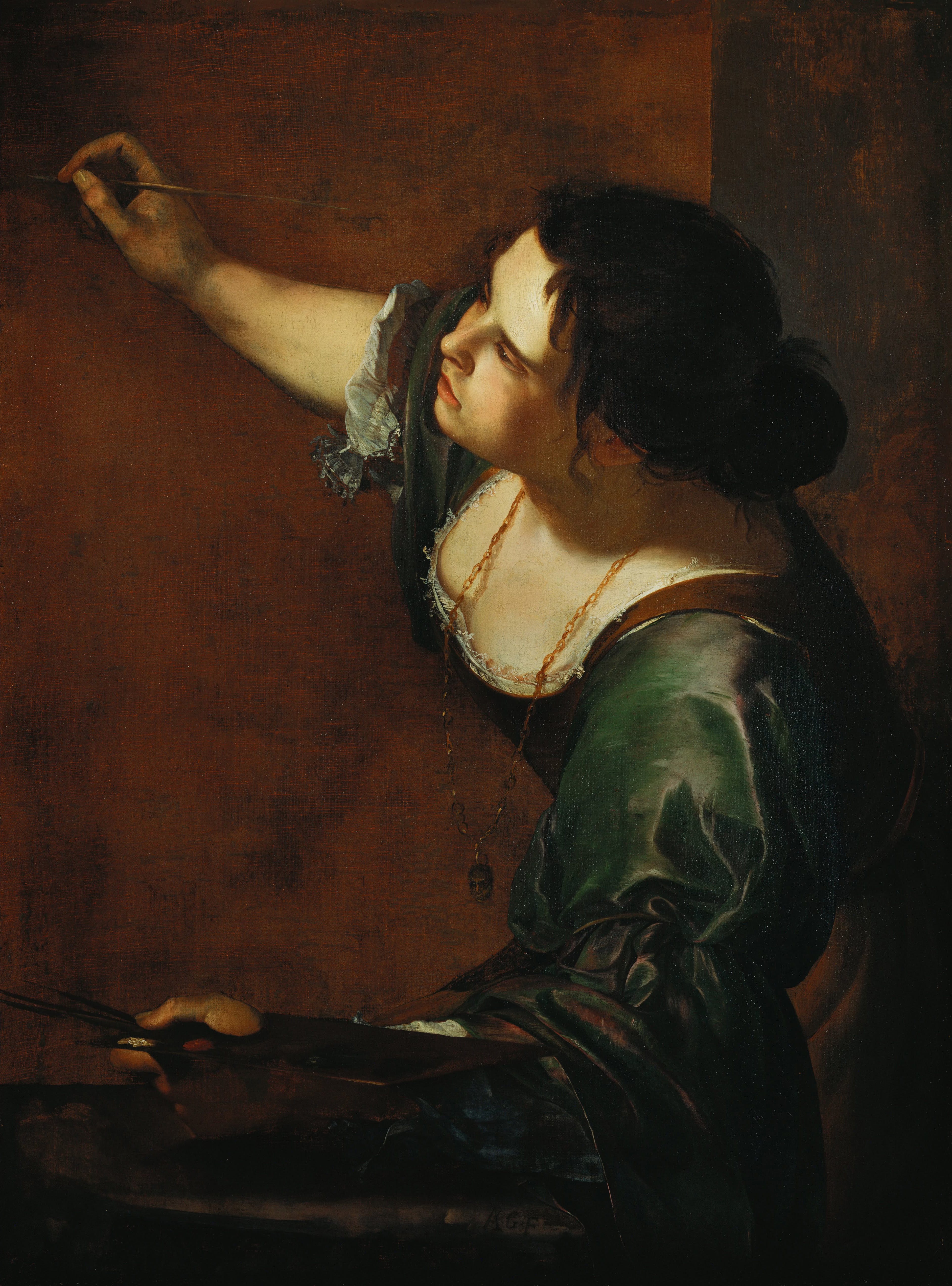
By now you noticed I have a thing for classical paintings.
When writing about craft, I cannot skip Caravaggio, but not because he made it.
Let’s look together at The Calling of Saint Matthew.

People see it for the first time and think it’s a tavern scene.
Men drinking, counting coins, doing nothing sacred. Caravaggio painted it that way deliberately — no halos, no clouds, no little fatty angels requiring no explanation. Just a room. Just people. Just an ordinary Tuesday. He made sacred work so human that people spent centuries inventing ridiculous theories to explain it. Five hundred years later we still see men drinking in a tavern.
That’s not a mistake. That’s the whole point.
Then the light enters from the right and ignores most of them. It finds one man at the end of the table — a tax collector, nobody special, doing what he always does. He looks up. His hand goes to his chest:
Me?
That gesture has been sitting in the dark for four hundred years, waiting for this exact moment to mean something different. Because here is what the system spent centuries telling us: that the light was neutral. That it found people based on merit. That the ones it passed over simply weren’t worth finding.
Abi Awomosu and Caroline Criado Perez spent considerable effort documenting what was actually happening in that room while the rest of us weren’t looking. The light was never neutral. It was just confident. And now the contrast is sharpening. The chiaroscuro is intensifying. The noise is so loud that whatever holds the light — actually holds it, not just reflects it for a moment — is becoming impossible to ignore.
That is what craft does right now. Not distinguish you from people who are failing. Distinguish you from people who are producing.
Me? Yes. But only if you became something worth finding before the light arrived.
Craft is the accumulation of judgment that makes your output unmistakably yours.
This is also exactly what gets systematically excluded from the canon. Not because it isn’t valuable. Because it isn’t legible to institutions that were built to credential what they already understood.
Most people never ask the second question. They stay busy answering the first.
The noise right now is extraordinary. That’s real and it’s not going away.
But signal has always been rare. What’s changed is that signal is now visible in a way it wasn’t before — because the contrast has sharpened. The chiaroscuro intensified. The dark got darker, which means the light got easier to see.
This is the best time in a generation to be genuinely good at something specific.
Not because the market got kinder (sorry, it didn’t). Because the definition of good finally got clearer. Average is visible now. What’s above it is visible too. The noise made the signal easier to find, not harder.
Matthew’s gesture — me? — was never really a question. It was recognition arriving as surprise. The calling was not random. It found someone who was already something.
You don’t wait for the light.
You become something worth finding.
While you're here:

This was a brilliant read, Lucy. I'm so glad i stumbled across it today. I really loved the way you framed average as the backdrop that makes real craft easier to see, rather than the main event itself, and the turn into whose knowledge was excluded from the canon gave it a much sharper edge. It also made me think a little about something i touched on in my AI mockery piece: that surface fluency can be reproduced very quickly, but the deeper layers of judgment, context and lived texture are still where something recognisably human starts to hold. This is one of the first pieces i've read of yours, and i'm already looking forward to the classical paintings in the next :-)
This is lovely - and heartbreaking - and honest. As a designer historian among other things, I appreciate when someone else names the same pattern from a different perspective. This has happened before, and quite frankly, it will happen again. Socrates was concerned that the written word would cost man his ability to remember. Go lookup the Luddites. The camera was the end of painting, and digital was the end of print. The most important part of your argument is that we need to be aware of the voices being left in the dark. Some of those voices have immense value.