


You are not a dish soap. You don’t shine because others tell you that you shine. You shine when you feel it.
This week I recorded a talking head reel about a book. Pure impulse. No fancy setup. No AI touch-ups. No strategy behind it. I didn’t dress up too much.
I didn’t expect it to go viral. It didn’t.
That’s not the point. I made enormous progress and only I know what it cost. The audience is not entitled to the backstage.
The problem is someone figured out how to monetize that feeling. The moment it was for sale, it was gone.
At some point, authenticity stopped being a philosophical problem and became a brand tactic. It became a way to package personality, monetize vulnerability, and turn the self into content with a posting schedule. Another LinkedIn content pillar with a six-figure coaching industry built on top of it. Selling dreams made out of carton and saliva within ordinary people's reach.
The book featured in my reel was Lionel Trilling’s Sincerity and Authenticity from 1972. He traced the slow collapse of genuine selfhood into performance, arguing that the moment a culture starts demanding authenticity, it becomes a staged performance. Because authenticity, by definition, cannot be demanded. Cannot be optimized. Cannot be scheduled for Tuesday at 9am alongside your thought leadership post or another successful certificate completion brag.
Strong demand destroys the essence of authenticity. The louder the professional world screams bring your whole self to work, the further away the self gets — because now being yourself is a deliverable with a deadline, an audience, and a personal brand waiting to monetize it. What it often means is: bring a self we can manage, measure, and market. Replace if needed.
Trilling wrote this fifty years before the first LinkedIn influencer posted their first vulnerable story about failure. Nobody listened. We were too busy finding our authentic professional voice.
How wise was that decision.
David Beckham is the rare exception that proves the rule. He built one of the most successful personal brands in history and somehow kept something real inside it. The working class kid from East London who genuinely loved football, genuinely loved fashion, genuinely loved his family. The brand worked because it wasn’t constructed on top of a performance. It was constructed on top of an actual person who happened to be consistent all the way down.
But notice what it took: decades of discipline, a face that launched a thousand campaigns, and a wife by his side who understood brand architecture better than most CEOs. Yet the moment the Netflix documentary arrived, what made it compelling was the cracks. The vulnerability. The things that didn’t fit the brand. Even Beckham needed to break the frame to remind you there was a person inside it.
Most people don’t have his infrastructure. Most people do not have the years, the discipline, the fortune or the myth. So they end up with the brand without the person, which is how you get polished emptiness.
Beckham is the exception. The rest of us are the rule.
The monetization trap is older than social media. Social media started the woodwork. AI finished it.
The sequence is always the same: you have something real to say. You say it. People relate. Someone tells you to build a brand around it. You start the dance: authentic storytelling, vulnerable leadership, bringing your whole self to work. Without noticing the exact moment it happens, you start performing the self you used to simply be.
The moment you monetize, you become a product. Products have positioning. Products have consistency. Products do not have bad days, contradictions, or opinions that alienate market segments. Post at least three times a week or get buried in your well-tailored suit and forgotten in the race to the coffin with no podium.
The asynchronous and predictable authentic self gets exchanged in a professional manner and over longer period of time for a well-thought and elegantly packaged product. You can even stick a ribbon on it. Because the stakes are high — or only seem high — you are willing to pay any price.
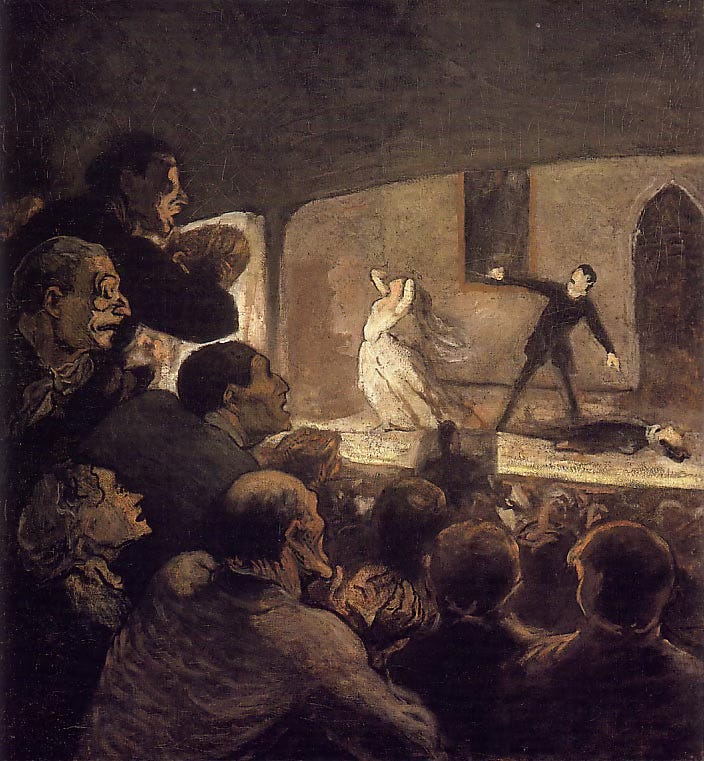
AI accelerated the magnitude of staged performance beyond anything Trilling could have imagined. It pushed the whole show further into comedy and drama with true story elements. Apply an AI filter to look younger. Prompt a machine to write your vulnerable LinkedIn post about failure. Apply hook relevant to your niche. Generate the version of yourself that processes fastest in rooms you want to enter. Manufacture sincerity at industrial scale.
Bonus: you can start selling your recipe for success to other ambitious professionals who haven’t lived long enough yet to figure out it’s an illusion.
There is place for tears, but you don’t know whether to cry or laugh anymore.
A generation was told loudly, commercially, relentlessly to be themselves — while being simultaneously sold seventeen different frameworks for how to do that correctly.
Be authentic. But make sure your authentic self is on brand.
Be vulnerable. But not too vulnerable — here’s a template.
Only $99 with discount code THEJOKEISONYOU.
Bring your whole self to work. Woah, better optimize it first.
DM for more details.
The result is not a generation of self-actualized individuals. It’s a generation exhausted by the performance of selfhood. Lonely in the specific way you can only be lonely when you’ve been performing for so long you’ve forgotten what you were performing in the first place.
We prompt machines for intimacy because the humans around us are too busy performing the role of their life. We’ve traded the awkward human moments for synthetic comfort. We are so lonely we’d rather be cheered by an algorithm than misread by a person — because a person might actually see through us and shatter the mirror we’ve spent years building.
Machine heart doesn’t judge. We love it. And it’s killing us.
Americus Reed II’s research on identity-based consumer behavior helps explain why authenticity can function as a brand signal, and why that signal is so vulnerable once consumers start testing it. Because the testing destroys the thing being tested.
You cannot perform authenticity and have it remain authentic. The observation changes the observed. This is not a marketing problem. It is a physics problem.
And a personal brand is still a brand. The self that is fully optimized for audience consumption is not a self. It’s a product on the shelf — one among many, each claiming to be the most genuinely themselves.
What’s left when the brand is dead?
Before you answer:
When did you last do something professionally that you didn’t immediately think about how it would look?
Take your time. The answer is the diagnosis.
So…. what’s left when the brand is dead?
The unglamorous moment. The unoptimized recording. The book you talked about because you couldn’t stop thinking about it, not because it fit your content strategy. The reel you made because you could not stop yourself. The version of you that exists when nobody is watching and there is nothing to monetize.
Remember the dish soap. You don’t shine when others tell you that you shine.
You shine when you feel it. The brand exists only in the internet and your head.
You were real before you had an audience.
You'll be real after they're gone.
The brand was never the point.
Fin
While you’re here:


I loved this. It made me think of one of the first pieces I wrote about authenticity — how easily it becomes a performance, but also how easily we mistake our old patterns, wounds, and survival mechanisms for our “real self.”
Your line about not being dish soap made me smile, but it also lands deeply. We don’t shine because the audience confirms it. We shine when we feel it from within.
I truly relate to this. I’ve always struggled to create content on demand or batch my content. In order to be authentic, I must feel inspired to create or share or write. A performance without feeling lacks the shine you so eloquently describe. Thank you!