


I have two court cases open in Spain.
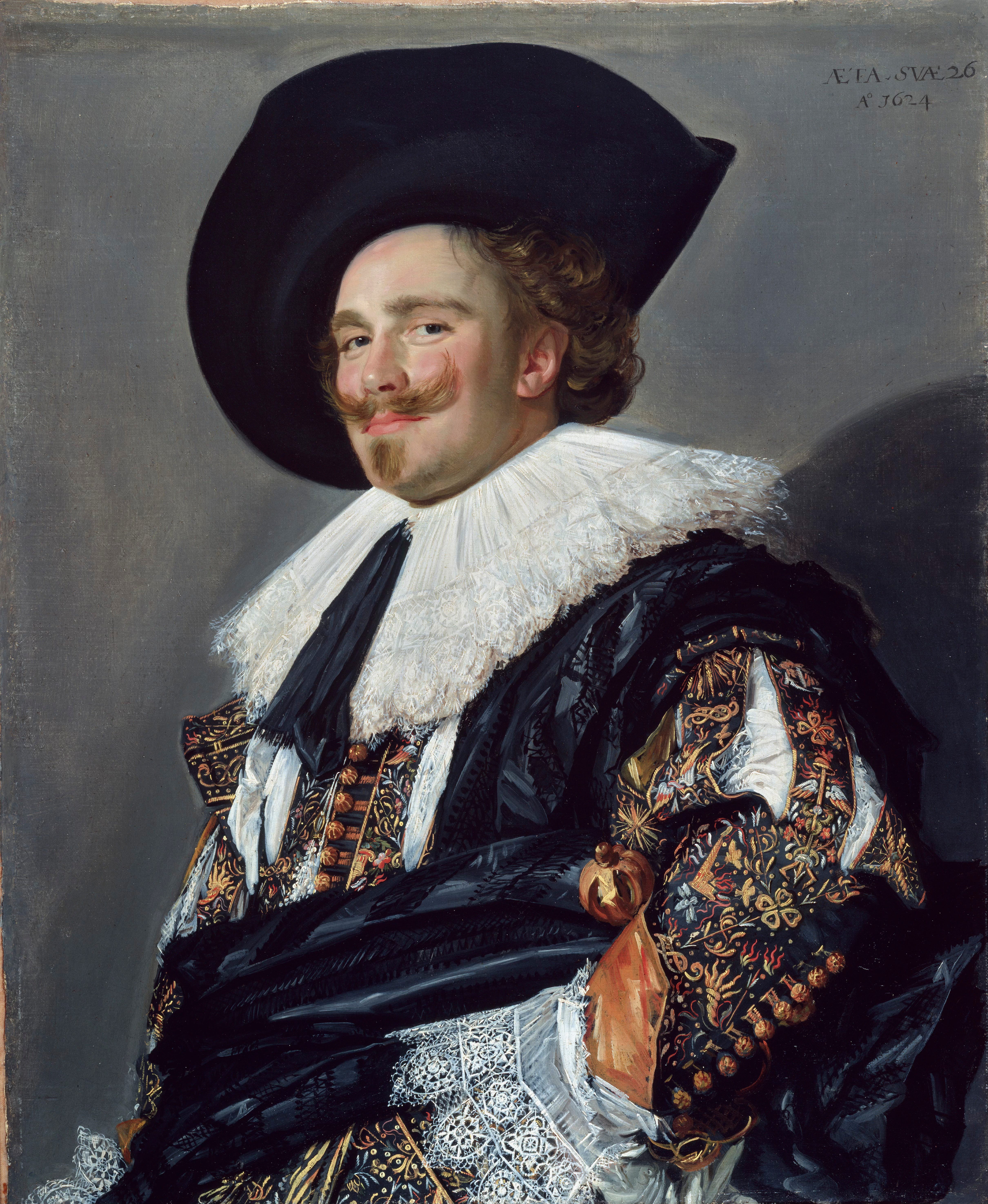
Both involve professionals so disgustingly confident they couldn’t be bothered to do the job — or in one case, even start it. Quoted high. Responded late. Always arrives God-knows-when. Absolutely certain throughout. No apology. No self-doubt. Not a single moment of professional shame.
And here’s what still unsettles me the most: they’re still in business.
Still quoting high. Still certain. Perfect conviction from start to disaster. They don't own a pair of pants on paper. Untouchable by law.
Which means I’ve been paying the wrong tax.
The confidence tax is not a penalty on incompetence. Confidence has nothing to do with competence. It’s a penalty on the appearance of uncertainty.
The market doesn’t price what you know. It prices how sure you look knowing it.
This isn’t new. Ironically, AI made it expensive in ways we haven’t fully named yet.
Two years ago, fluency with AI tools made you interesting. Today its absence makes you a liability. The floor moved. No announcement came with it. Expectations towards an entire generation of professionals have shifted — quietly, completely.
Now professionals are performing certainty they don’t have, in tools they half-understand, for rooms full of people doing exactly the same.
Fake smiles. Congratulations. Nobody is asking uncomfortable questions.
God forbid we disturb this spectacle too early.
ManpowerGroup’s 2026 Global Talent Barometer surveyed nearly 14,000 workers across 19 countries. AI usage jumped 13%. Confidence in using it dropped 18%. Workers are being handed tools without training, context or support. The same report names a new trend: Job Hugging — professionals sticking to the current roles out of fear of layoffs, economic anxiety, a job market that punishes movement. Stability over growth. Safety over risk. Anticipated results: confidence collapsing quietly from the inside. That poison we slowly drink over a longer period of time is weakening our self-esteem. We chose this for ourselves.
On top of a competence gap we built a confidence game and called it transformation.
A May 2026 Resume Now survey found that 74% of workers believe they can identify AI-generated content. Nearly half can’t. Two thirds have already mistaken AI output for human work without realising it. Confusing confidence with competence - a sign of our times.
Researchers at Carnegie Mellon found the same pattern in the tools themselves. Trent Cash and Daniel Oppenheimer’s multi-year study found LLMs — including ChatGPT and Gemini — consistently overestimate their confidence even when wrong. Unlike humans, who usually sense when they’ve underperformed, the model has no metacognitive check. It doesn’t know what it doesn’t know. And neither, increasingly, do the people borrowing its certainty.
This is the pipeline nobody talks about: AI draft, light edit, delivered with authority, credit collected. Nobody’s lying exactly. But nobody’s present either. The work looks sharp. The person behind it is getting hollower.
And then one step further: entire automation systems built to produce content at scale, trained to mimic an author’s voice. Monetising the growing gap where original thought used to live. Everyone wins, apparently.
Except the person whose name is on it.
Sandcastles.
Endlessly impressive and elusive until the tide comes in.
And the tide always comes in.
I’m not arguing against AI fluency. Quite the opposite. Use it fully. Use it well. Follow the people genuinely advocating for ethical and responsible AI — not blinded by the hype, seeing the value clearly, implementing it like adults.
Because implementing AI is not a choice anymore. Integration itself isn’t optional. How you integrate absolutely is. You can outsource your thinking and call it productivity. Delegate your judgment and call it efficiency. Atrophy your strategic muscles and call it optimization.
Or you can integrate deliberately — using AI to expand what you explore, not replace what you think.
But there’s a difference between what compounds and what hollows.
Using AI to extend your judgment compounds. Outsourcing your first instinct hollows. One builds a person. The other builds a performance. And performances, eventually, get reviewed.
The leader who hedged every sentence in that meeting last week — qualified, reconsidered, asked the uncomfortable question — was the only one actually thinking. The room read it as weakness. That’s the tax.
We’ve built workplaces that penalise the one thing AI cannot replicate: genuine uncertainty, held in public, without apology.
You will integrate AI. The question was never if.
The question is whether, five years from now, you’ll still know what you actually think.
Or whether you’ll have to ask a machine.
Fin
While you're here:
Every salmon needs an umbrella

Nobody told you to reply within five minutes. You decided that yourself.
You share valid, important parts about confident rooms. Reading this piece makes me more concerned about the future.
Such an important post, Lucy! Thank you for including the hedge 🥳 it’s a heavy tax